PRODUCTS
CASTINGS — OUR SPECIALIZATION AND CAPABILITIES
We specialize in the production of castings and equipment for the energy, mining, agricultural, metallurgical, and coke-chemical industries. We offer our clients comprehensive solutions: from the development of design documentation to the production of the casting and final machining.
Single-piece and small-batch: We handle the production of individual parts as well as small to medium series according to your technical drawings. We technically evaluate every design in advance to ensure it completely matches our production limits and guarantees the required result.
Weight limits: Production of castings in the weight range of 1 kg to 400 kg. The minimum order to start production is 400 kg of a single material grade.
Production volumes: We maintain a stable monthly production capacity of 40 tons, with the ability to flexibly adjust volumes according to the customer's schedule.
Material diversity: We cast a wide range of grades from grey cast iron, ductile iron, and cast steel in accordance with technical standards.
Comprehensive supplier convenience: We simplify your purchasing process. In addition to the production and machining itself, we also handle agreed packaging and logistics directly to you. You can find a detailed overview of all our processes in the client services section.
MATERIALS AND NORMS
GREY CAST IRON
Grey cast iron (lamellar graphite iron) is an iron-carbon alloy where carbon (usually 2.5–4.0%) is precipitated in the form of lamellar graphite in a pearlitic or ferritic-pearlitic matrix.
The material excels in its ability to dampen vibrations and resonance, has high compressive strength, exceptionally good machinability, and reduced wear due to friction.
Typical applications include components that require dimensional stability and are not exposed to strong dynamic impacts.
Overview of manufactured grey cast iron grades:
| EN ISO | ČSN | DIN | PN |
|---|---|---|---|
| EN-GJL-150 | ČSN 42 2415 | GG-15 | Zl 150 |
| EN-GJL-200 | ČSN 42 2420 | GG-20 | Zl 200 |
| EN-GJL-250 | ČSN 42 2425 | GG-25 | Zl 250 |
| EN-GJL-300 | ČSN 42 2430 | GG-30 | Zl 300 |
| EN-GJL-350 | ČSN 42 2435 | GG-35 | Zl 350 |
DUCTILE CAST IRON
Ductile cast iron (nodular cast iron) is a top-tier structural material. Unlike grey cast iron, carbon crystallizes into spherical shapes (nodules) during solidification. Because of this shape, conditions that would reduce the material's strength are avoided.
This phenomenon gives ductile iron exceptional mechanical properties – high ultimate tensile strength, excellent toughness, and elasticity approaching that of steel, all while maintaining very good foundry properties.
Typical applications include highly stressed rotary parts (rotors, turbine assemblies, gears), heavy axles, brackets, and other structural safety elements that must withstand dynamic loads and impacts.
Overview of manufactured ductile cast iron grades:
| EN ISO | ČSN | DIN | PN |
|---|---|---|---|
| EN-GJS-400-15 | ČSN 42 2304 | GGG-40 | Zs 400-15 |
| EN-GJS-500-7 | ČSN 42 2305 | GGG-50 | Zs 500-7 |
| EN-GJS-600-3 | ČSN 42 2306 | GGG-60 | Zs 600-3 |
CAST STEEL
We use carbon and structural steels for castings where mechanical stress exceeds the limits of even the highest quality cast irons. Cast steel is characterized by extreme impact resistance, a high yield point, and excellent weldability.
The production of steel castings requires high technological discipline due to greater shrinkage and melting temperatures; however, the result is a material with unsurpassed structural integrity.
The material is primarily intended for castings operating in abrasive environments, such as wear-resistant parts and armor plates.
Overview of manufactured cast steel grades:
| EN ISO | ČSN | DIN | PN |
|---|---|---|---|
| GE 200 | ČSN 42 2633 | GS-38 | L 400 |
| GE 240 | ČSN 42 2643 | GS-45 | L 500 |
| GE 280 | ČSN 42 2653 | GS-52 | L 600 |
PRODUCTION TECHNOLOGIES
The quality and precision of a casting are determined long before the metal is actually poured. To cover the entire spectrum of industrial requirements – from massive blocks to complexly shaped impellers – we operate two distinct but complementary molding technologies.
Lost Foam Casting
We use precise polystyrene patterns that are coated with a refractory wash and embedded in dry silica sand without the use of chemical binders. During pouring, the molten metal instantly vaporizes the pattern and exactly replicates its shape.
Coreless molding: Lost Foam casting allows for the casting of complex internal geometries and cavities without the use of sand cores (ideal for valve bodies and pump rotors).
High surface quality: Smooth casting surface without burrs or flashes.
Economic efficiency: Minimization of mechanical machining allowances and reduction of the total weight of the rough part.
No-Bake Molding
A process based on filling core boxes or forming patterns using a sand mixture enriched with chemical binders (resins). The mold hardens through a cold chemical reaction, guaranteeing its immediate structural rigidity.
Dimensional stability: The exceptional strength of the mold guarantees absolute precision and dimensional reproducibility, even in large series.
For massive castings: The technology is fully optimized for medium-heavy and heavy thick-walled castings that require slow metal cooling.
Material homogeneity: Ensures calm filling of the mold and minimizes the occurrence of internal foundry defects.
PRODUCTION SAMPLES
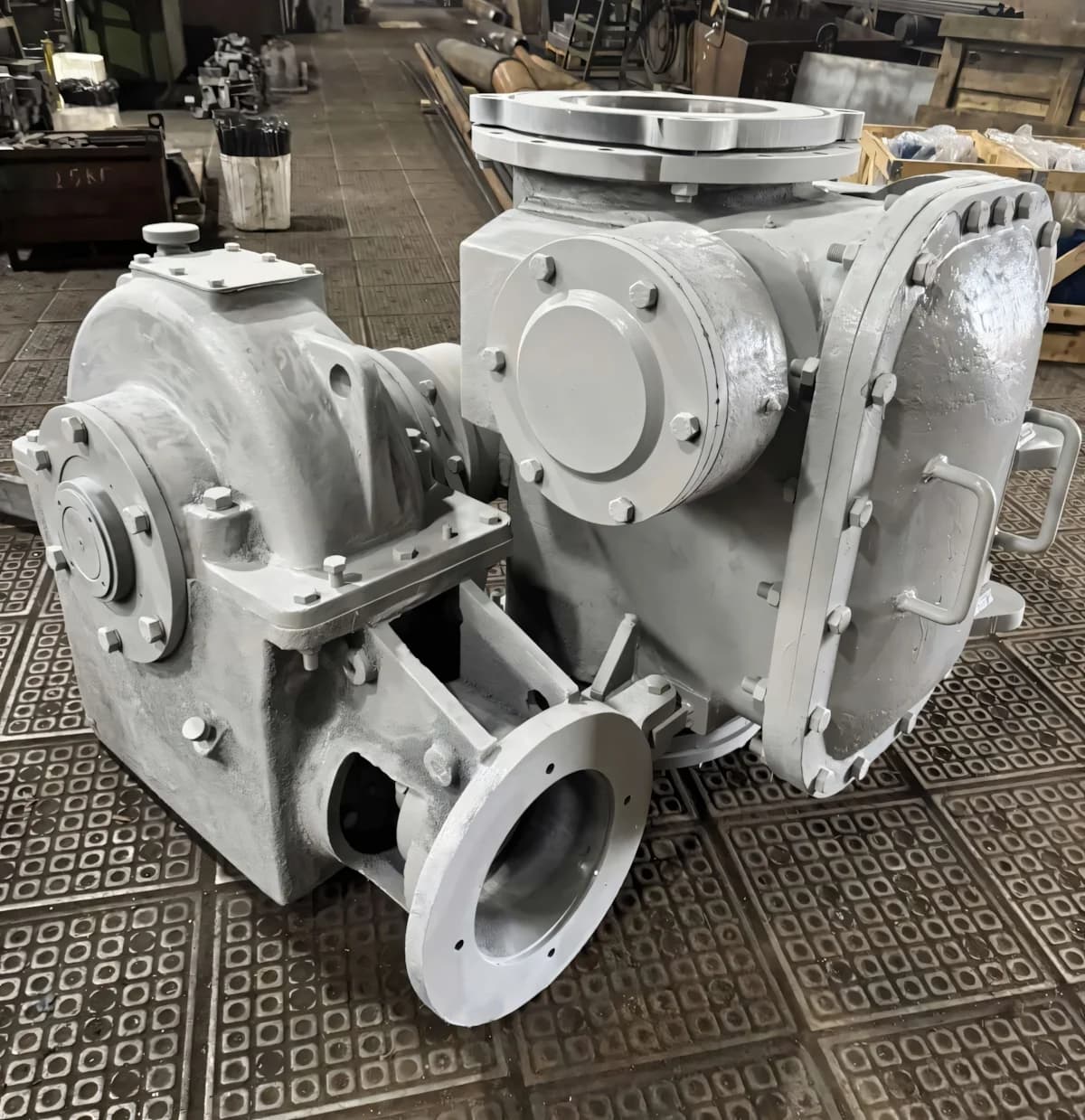
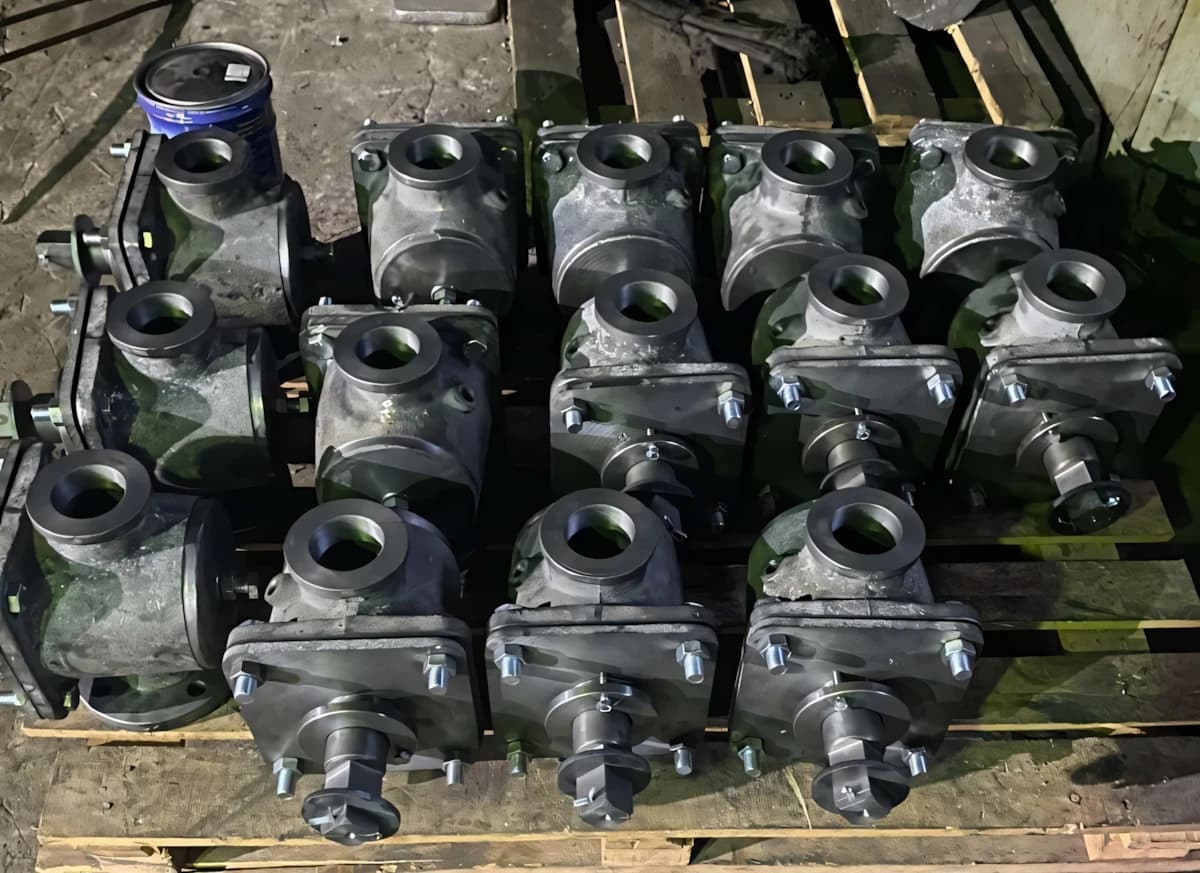
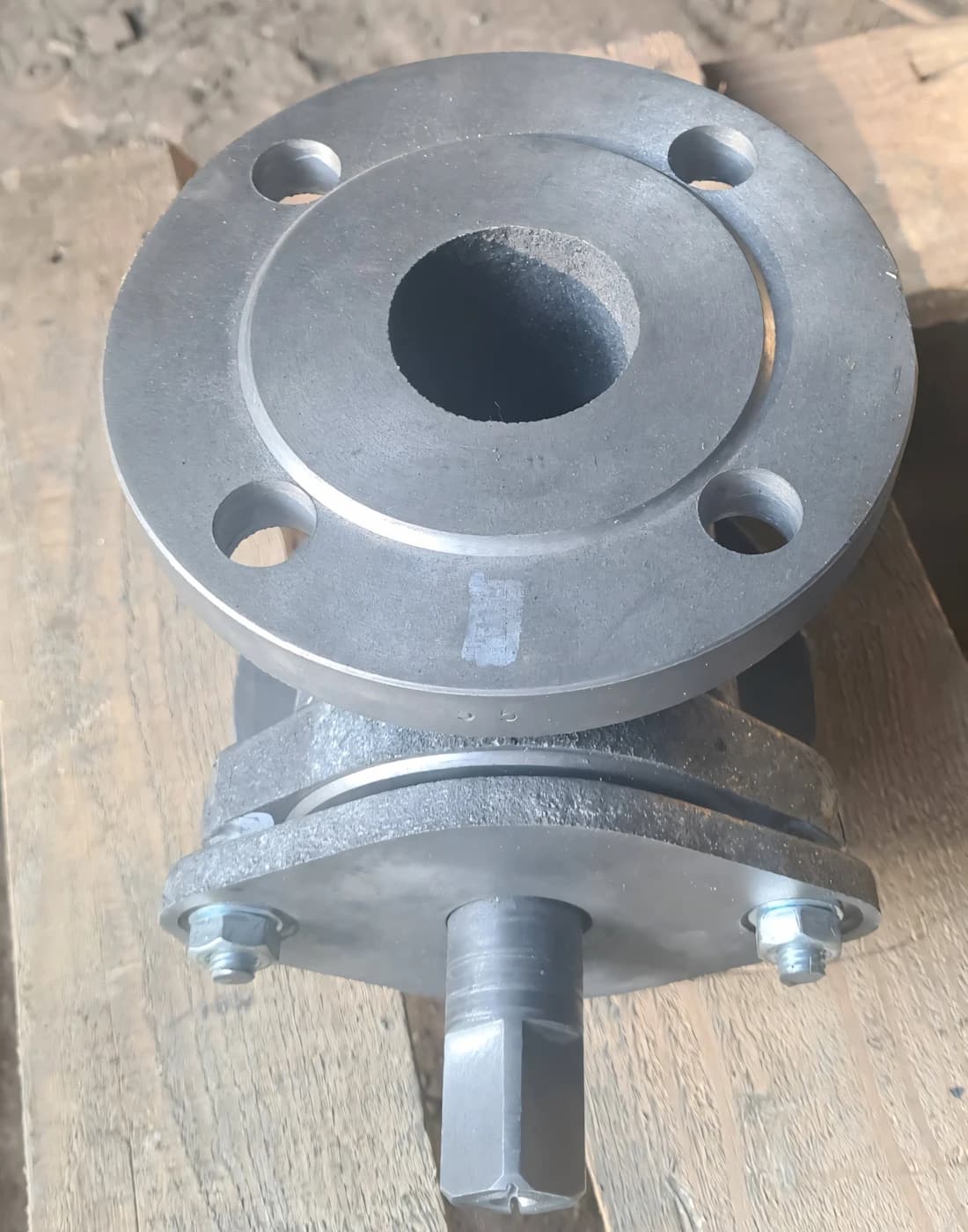
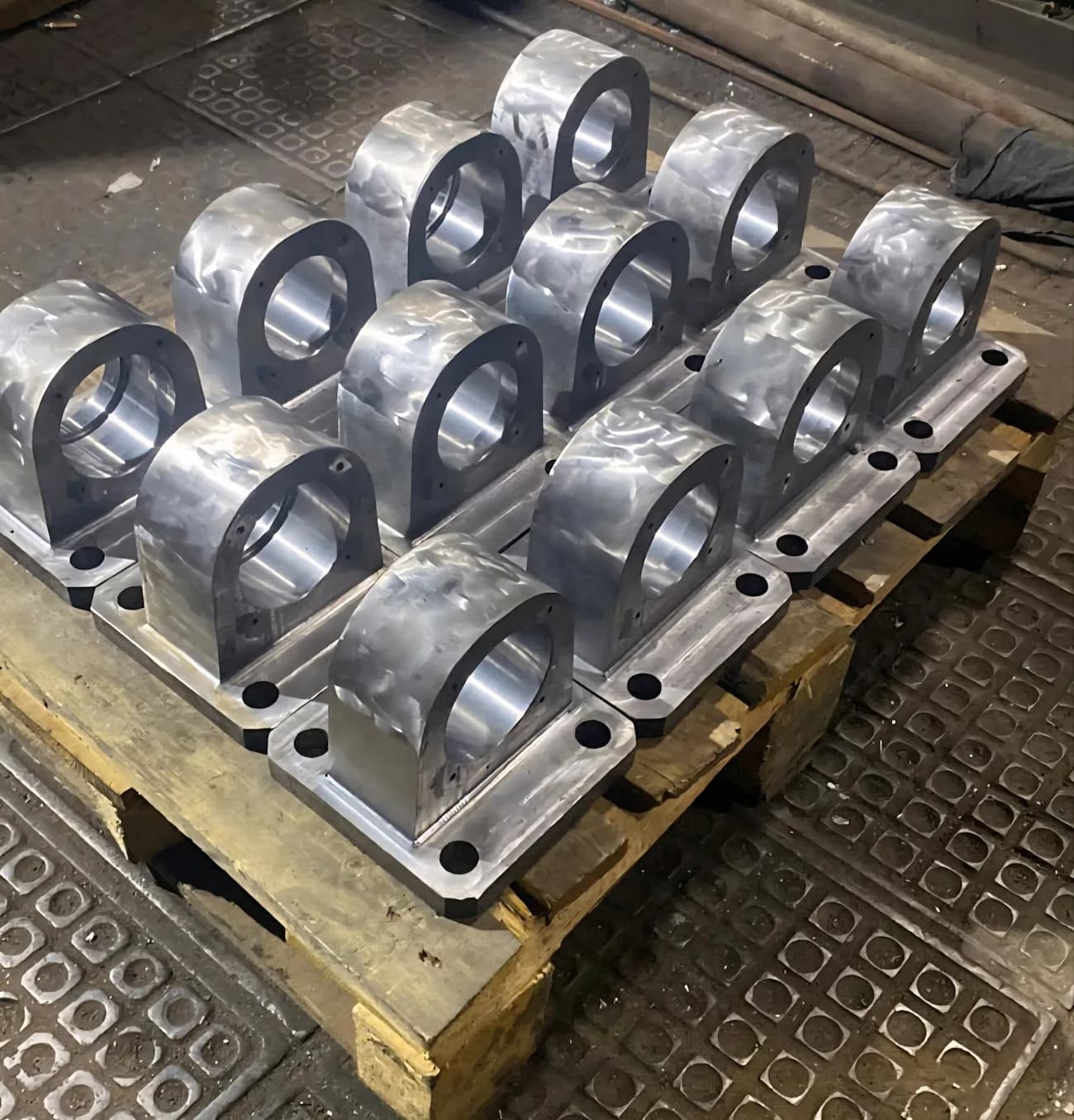
Take a look at selected implementations of our castings. From massive structural elements to precisely machined parts for heavy engineering.